Disobedient Futures Anthology (ed. Rita Banerjee, Diana Norma Szokolyai, and Corrine Previte) Acquired by University Press of Kentucky

Editors Rita Banerjee, Diana Norma Szokolyai, and Corrine Previte are delighted to share that their new speculative literature anthology Disobedient Futures has been acquired by University Press of Kentucky! Banerjee, Szokolyai, and Previte are delighted to be working with Editor Abby Freeland and her team including Alice Fugate Brown at University Press of Kentucky. Here’s a bit more about Disobedient Futures:

Rita Banerjee, Diana Norma Szokolyai, and Corrine Previteโ€™s, edโ€™s, DISOBEDIENT FUTURES, a speculative literature anthology that imagines what the future cultures of America and the world might look like through a diverse, inclusive, and multi-genre lens, and includes fiction, poetry, nonfiction, hybrid work, art, and photography that explore utopian, dystopian, and alternative realities, futuristic places, and parallel histories to Abby Freeland at University Press of Kentucky (world).

Featured Authors:

George Abraham | Thommy Ahneesan | Kazim Ali | Kenzie Allen | Paul Daniel Ash | Madeleine Barnes | Rita Banerjee | Zeina Hashem Beck | Alyssa Beckitt | Oliver Baez Bendorf | Emma Bolden | Frances Cannon | Alex Carrigan | Marianne Chan | Kholoud Charaf | Marlena Chertock | Kristina Marie Darling | JJJJJerome Ellis | Ayokunle Falomo | Carlos Andrรฉs Gรณmez | Dipika Guha | Robin Hemley | Candace Jensen | Shanta Lee | Shirley Jones-Luke | Ilya Kaminsky | Liz Kellebrew | Raphaรซl Amahl Khouri | Samuel Kแปฬlรกwแปlรฉ | Oksana Marafioti | Adam McOmber | Sebastian Merrill | Rajiv Mohabir | Neha Mulay | Ukamaka Olisakwe | Matthew Olzmann | January Gill O’Neil | Josiah Patterson | Diana Norma Szokolyai | Corrine Previte | Ruben Quesada | Thaddeus Rutkowski | Nneka Samuel | Jason Schneiderman | Kyle Scott | Dayton Shafer | David Shields | Erin Stalcup | Margo Taft Stever | Bianca Stone | Anca L. Szilรกgyi | Brian Teare | Ella Voss | David Heska Wanbli Weiden | Cecilia Woloch

#RitaBanerjee #DianaNormaSzokolyai #CorrinePrevite #CambridgeWritersWorkshop #fiction #poetry #nonfiction #art #photography #hybridwork #speculativeliterature

Screening of Nandita Das’s Manto – December 16, 2025 * 6:00 pm

Rita Banerjee will introduce and lead the discussion for Nandita Das’s 2018 film,ย Manto,ย about the life and trials of the modernist Urdu writer Saadat Hasan Manto,ย on December 16, 2025 from 6:00-8:30 pm at the Institute for Indology and Tibetology atย Ludwig-Maximilians-Universitรคt Mรผnchen, (Ludwigstr. 31, Seminarraum 427).ย  Anyone interested in translation studies, Modern South Asian literature, or art house film is welcome to join the screening.

โ€œBorn in Punjab in 1912, Manto was one of most controversial writers of the age, eloquently crafting empathetic and shocking short stories about those living on the edges of society. Many of his best tales were inspired by his time in what is now Mumbai between 1936 and 1948. He would recall these years as the happiest of his short life, with stories that portrayed a very different side to India, embracing both beauty and uglinessโ€ฆ While best known for his tales of partition such as โ€˜Toba Tek Singh,โ€™ he also masterfully captured the underbelly of [Mumbai], telling stories of pimps, gangsters, salon madams, and prostitutes living in cramped chawls. His stories were frank, forthright and imbued with a sense of moral outrage that aimed to give a voice to the voiceless. Notoriety inevitably followed him, and Manto faced trial six times on charges of obscenity for his short storiesโ€ฆ

“โ€˜Heโ€™s so relevant to today, and it is my way of responding to what is happening now,โ€™ explains [Director Nandita] Das, speaking from Mumbai. โ€˜His empathy was very deep for those that exist on the margins of society โ€“ especially for women and sex workers โ€“ and no one in India was writing about that at the timeโ€™โ€ฆ Das was fascinated by the fact that Manto wrestled with the theme of identity all his life. It was this that inspired her to make the film. He was a Muslim living in a cosmopolitan city also populated by Sikhs, Christians, and Jews. It was a place where textile workers huddled in cramped tenements while film producers puffed on fat cigars in luxurious surroundings. Manto lived and breathed a city of contrast and contradiction, much of which is still reflected in its modern incarnation, Mumbai.โ€ โ€“ Joseph Walsh, The Guardian

Rita Banerjee is an Assistant Professor of Creative Writing and Director, MFA Program for Writers at Warren Wilson College.

“How to Survive as a Writer Under American Capitalism” Reading & Talk by Rita Banerjee – University of North Dakota * October 7, 7pm CT on Zoom

Dr. Rita Banerjee will be reading from her personal essay “American Caste” and presenting a short lecture on “How to Survive as a Writer under American Capitalism” for the University of North Dakota Virtual Speakers Series in Writing, Editing, & Publishing on Tuesday, October 7 at 7 pm CT via Zoom. Audience members can join the Zoom webinar by scanning the QR Code above. And here’s more information about the talk:

How to Survive as a Writer under American Capitalism

In the 21st Century, creative writers in the United States are facing unprecedented challenges to their discipline, craft, and survival. In 2025 alone, writers have witnessed large cuts in government funding for universities and humanities departments, the suspension of the NEA Fellowship for Creative Writers, and a number of class-action lawsuits against Artificial Intelligence companies, such as Bartz vs. Anthropic, in which A.I. companies are accused of illegally downloading 7.5 million literary and scholarly books and 81 million research papers to train their Large Language Model systems.[1] In this era of late capitalism, how can writers find viable ways to maintain and grow in their craft, seek the education in the humanities they desire, and create sustainable careers and communities in creative writing? As a multi-genre writer who is deeply inspired by world literature and transnationalism, Dr. Rita Banerjee will discuss her journey as a writer and literary citizen, and will share resources on how creative writers can create sustainable, nurturing, and viable careers, writing practices, and literary communities despite the pressures of American capitalism.

About the Author:

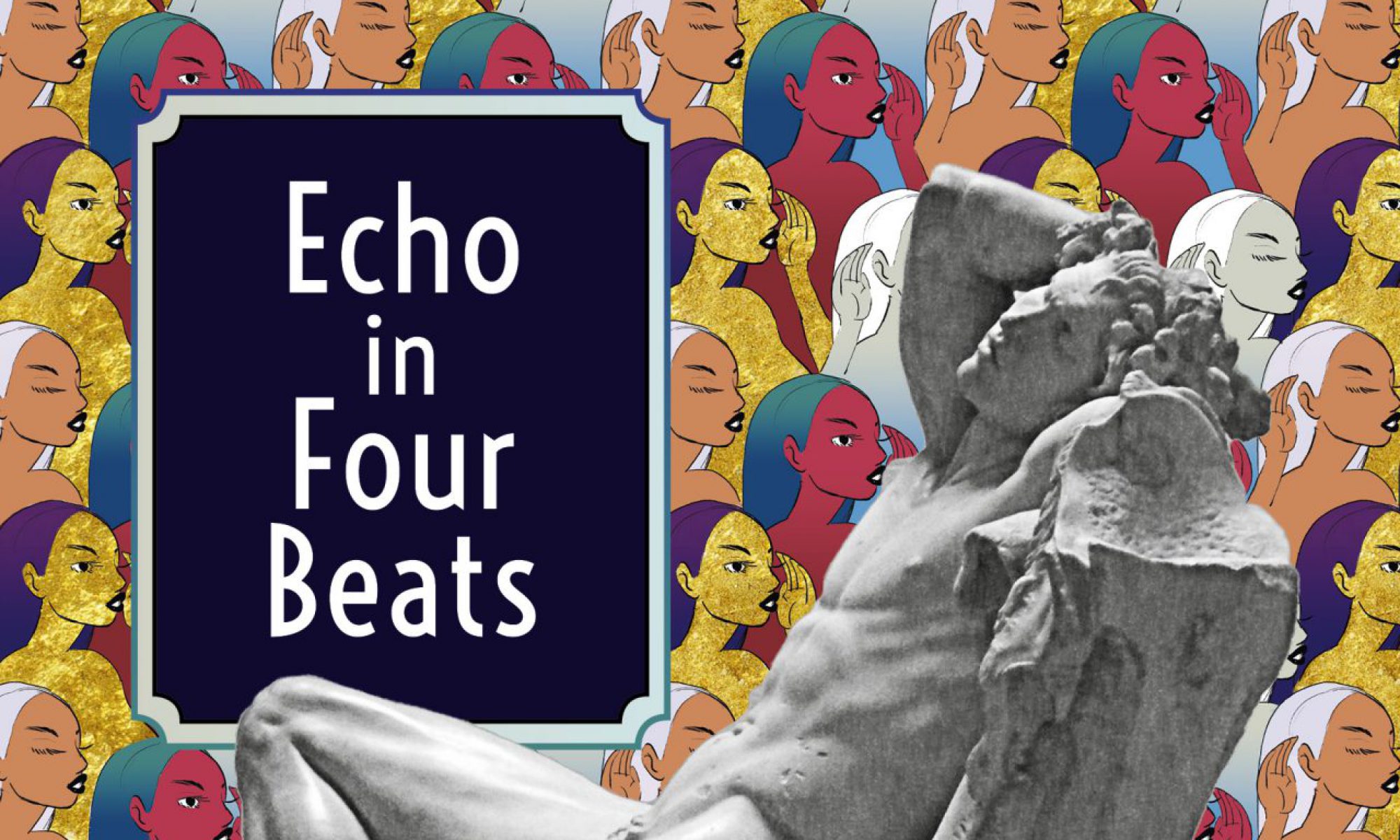
Rita Banerjee is an Assistant Professor of Creative Writing and Director of the MFA Program for Writers at Warren Wilson College. She received her doctorate in Comparative Literature from Harvard University and her MFA in Creative Writing from the University of Washington. She is editor of the forthcoming anthology Disobedient Futures (University Press of Kentucky) in which writers imagine what the future cultures of the United States and the world could look like if folks disobeyed gender, tribal, and class paradigms, and explored disobedient forms of environmentalism and borders. She is also the author of CREDO: An Anthology of Manifestos and Sourcebook for Creative Writing, the poetry collections Echo in Four Beats and Cracklers at Night, the novella โ€œA Night with Kaliโ€ in Approaching Footsteps, and is co-writer of Burning Down the Louvre, a forthcoming documentary film about race, tribalism, and intimacy in the United States and in France. Her work appears in Sign & Breath: Voice and the Literary Tradition, Academy of American Poets, Poets & Writers, PANK, Nat. Brut., Hunger Mountain, Tupelo Quarterly, Isele, Vermont Public Radio, and elsewhere. She serves as Senior Editor of the South Asian Avant-Garde and Executive Creative Director of the Cambridge Writersโ€™ Workshop, which she co-founded at Harvard in 2008. She received a Vermont Arts Council Creation Grant for her new memoir and manifesto on female cool, and one of the bookโ€™s opening chapters โ€œBirth of Cool,โ€ was a Notable Essay in the 2020 Best American Essays, and another chapter, โ€œThe Female Gaze,โ€ was a Notable Essay in the 2023 Best American Essays.


[1] Reisner, Alex. โ€œThe Unbelievable Scale of AIโ€™s Pirated Book Problem.โ€ The Atlantic. Online. March 20, 2025.

Sign & Breath: Voice and the Literary Tradition Anthology Launch feat. Rita Banerjee – September 18, 6:30 pm EDT on Zoom

On September 18, 6:30 pm EDT, Shanta Lee and Philip Brady, the editors of Sign & Breath: Voice and the Literary Tradition, will be celebrating the launch of their new anthology with a reading featuring their Sign & Breath Authors. Featured authors will include Tim Seibles, Rita Banerjee, Diana Whitney, Ru Freeman, Diane Raptosh, Philip Metres, Haleh Gafori, Claire Bateman, Carolyn Finney, and Bruce Smith. Please register on Zoom to attend the reading at 6:30 pm EDT.

Rita Banerjee will be reading from her flash essay “The Spirit Door” during the Sign & Breath Reading Launch.

Sign & Breath: Voice and the Literary Tradition is a new critical anthology that takes a different approach to exploring these questions:ย What is poetry? What defines voice?

Featuring a range of contemporary artists, many of whom work across different mediums and genres, Sign & Breath introduces the reader to one page that sings in any genre โ€“ prose, fiction, poetry, spoken word, hybrid forms, and song โ€“ across diverse traditions. Rather than define poetry as a genre with conventions, traditions, codes, and modalities, this book features poetry as a faculty that thrums in all written and spoken art. Readers are introduced to a text followed by a discussion with the author about creating the piece, ties to creative lineage, and the definition of voice through their practice. This anthology contributes to the dialogue among genres which will reframe understanding of poetry as an aesthetic experience of language. With one page that sings in any genre, Sign & Breath presents a new, inclusive perspective on poetry while two questions remain: Do we have a clearer understanding of what defines poetry? Do we have a clearer understanding of voice?

Sign & Breath: Voice and the Literary Traditionย debuted on August 26, 2025. You canย orderย Sign & Breathย hereย and read Rita Banerjeeโ€™s personal flash essay โ€œThe Spirit Doorโ€ and interview, which are featured in the anthology.

Sign & Breath Anthology feat. Rita Banerjee Now Available for Pre-Order & Debuts August 26, 2025

Sign & Breath: Voice and the Literary Traditionย (ed. Shanta Lee and Philip Brady) is a new critical anthology that takes a different approach to exploring these questions: What is poetry? What defines voice?

Featuring a range of contemporary artists, many of whom work across different mediums and genres, Sign & Breath introduces the reader to one page that sings in any genre – prose, fiction, poetry, spoken word, hybrid forms, and song – across diverse traditions. Rather than define poetry as a genre with conventions, traditions, codes, and modalities, this book features poetry as a faculty that thrums in all written and spoken art. Readers are introduced to a text followed by a discussion with the author about creating the piece, ties to creative lineage, and the definition of voice through their practice. This anthology contributes to the dialogue among genres which will reframe understanding of poetry as an aesthetic experience of language. With one page that sings in any genre, Sign & Breath presents a new, inclusive perspective on poetry while two questions remain: Do we have a clearer understanding of what defines poetry? Do we have a clearer understanding of voice?

Sign & Breath: Voice and the Literary Tradition debuts on August 26, 2025. You can pre-order Sign & Breath here and read Rita Banerjee’s personal flash essay “The Spirit Door” and interview, which are featured in the anthology. A trailer for the anthology follows below:

July 2025 Faculty Lectures from the MFA Program for Writers at Warren Wilson College Now Available

The MFA Program for Writers at Warren Wilson College recently celebrated its annual summer residency in Swannanoa, NC this July. The residency featured inspiring lectures and classes from both faculty and graduating students. And writers and readers can access the wonderful craft discussions and lectures from the MFA Program for Writers faculty online here. All MFA Store proceeds directly support graduate student scholarships in the MFA Program for Writers.

Rita Banerjeeโ€™s Opening Lecture “Writing Towards Psychic Heat,”ย asks, โ€œWhen writing towards psychic heat, is the only way out through?โ€ Given the kinds of social traumas a reader and writer may have experienced or witnessed in their lives, this talk offers four alternative craft techniques and strategies that allow writers to write towards significant moments of emotional and psychic tension within their poetry, fiction, and creative nonfiction. Some authors, studied in this talk, who offer an array of strategies to write towards psychic heat include Robert Frost, Brandon Taylor, Roxane Gay, Haruki Murakami, Arundhati Roy, Ocean Vuong, Patrick Rosal, Carmen Maria Machado, Rainer Maria Rilke, Alokeranjan Dasgupta, Jibanananda Das, Subhas Mukhopadhyay, Gillian Flynn, and Marcel Proust.

The Warren Wilson MFA Program for Writers store features a rich archive of faculty lectures and craft discussions from January 1992 โ€“ July 2025, and can be accessed here: warrenwilsonmfa.org/store/

March 26-29: AWP 2025 Events feat. Rita Banerjee

If you are planning to attend the AWP 2025 Conference in Los Angeles, CA from February March 26-29, 2025, stop by these events featuring Rita Banerjee and the MFA Program for Writers at Warren Wilson College! To learn more about the MFA Program for Writers at Warren Wilson College, stop by the Warren Wilson MFA Booth (#715) at the AWP 2025 Conference!

Friday, March 28, 2025:

MFA Program for Writers
at Warren Wilson College Reception

March 28, 2025 * 8:00 pm – 11:00 pm PST
Songbird Cafรฉ, 900 N Broadway #1050
at Blossom Plaza, Los Angeles, CA 90012

Saturday, March 29, 2025:

Our Voices Make a Movement:
Storytelling as Anti-Racist Pedagogy
March 29, 2025 * 3:20-4:25 pm PST
Room 502A, Level Two, Los Angeles Convention Center
1201 South Figueroa Street, Los Angeles, CA 90015

What the Universe Is Reading feat. Rita Banerjee & Amanda Shaw – February 11, 2025 * 7:30 pm EST on Zoom

Poet Michael Mercurio hosts and curates “What the Universe Is,” a poetry reading series featuring poets and writers Rita Banerjee and Amanda Shaw reading at 7:30 pm EST on Tuesday, February 11, 2025. Register for the reading on Zoom and join the reading live at: bit.ly/WTUIFeb2025! And here’s more information about the reading & writers below:

Make some time for poetry during this shortest of months. Come hear two exceptional poets read for you on Zoom, so you donโ€™t have to leave the house in these cold & dark days. Let these poets bring you light & warmth! ย 

Rita Banerjee is an Assistant Professor of Creative Writing and Director of the MFA Program for Writers at Warren Wilson College. She is author of Disobedient Futures, CREDO: An Anthology of Manifestos and Sourcebook for Creative Writing, Echo in Four Beats, โ€œA Night with Kaliโ€ in Approaching Footsteps, and Cracklers at Night, and co-writer of the documentary Burning Down the Louvre. Her work appears in Academy of American Poets, Poets & Writers, PANK, Nat. Brut., Hunger Mountain, Tupelo Quarterly, Isele, Vermont Public Radio, and elsewhere. She serves as Senior Editor of the South Asian Avant-Garde and Executive Creative Director of the Cambridge Writersโ€™ Workshop. She received a Vermont Arts Council Creation Grant for her new memoir and manifesto on female cool, and one of the bookโ€™s opening chapters โ€œBirth of Cool,โ€ was a Notable Essay in the 2020 Best American Essays, and another chapter, โ€œThe Female Gaze,โ€ was a Notable Essay in the 2023 Best American Essays

Amanda Shaw is the author of It Will Have Been So Beautiful (Lily Poetry Review Books, 2024). Based in Washington, DC, she is a teacher and editor at the World Bank and other international organizations. Her poems have appeared in LEON Literary Review, Spoon River Poetry Review, The Mid-Atlantic Review, and Lily Poetry Review, which she recently joined as the reviews editor. Over the last 25 years, she has taught students of all ages and backgrounds in New York, Boston, Detroit, and Rome, Italy. 

Itโ€™s very easy to register at bit.ly/WTUIFeb2025 โ€” make sure you donโ€™t miss out!

January 2025 Faculty Lectures from the MFA Program for Writers at Warren Wilson College Now Available

Theย MFA Program for Writersย recently celebrated its annual winter residency this past January. The residency featured inspiring lectures and classes from both faculty and graduating students. And writers and readers can access the wonderful craft discussions and lectures from the MFA Program for Writers facultyย online here. All MFA Store proceeds directly support graduate student scholarships in the MFA Program for Writers.

Rita Banerjeeโ€™s Opening Lecture,ย “The Poetry and Power of Witness” asks, “How do we as writers process the various kinds of social trauma that inform and affect our daily lives?” In Against Forgetting, Carolyn Forchรฉ argues against an easy descent into forgetfulness or a culture of oblivion as espoused a constant carousel of rotating news headlines. She instead introduces the notion of โ€œpoem as trace, poem as evidenceโ€ and how the work of a writer can serve as a witness to and record of history. And in her introduction to Playing in the dark, Toni Morrison writes that, โ€œWriting and reading mean being aware of the writerโ€™s notions of risk and safety, the serene achievement of, or sweaty fight for, meaning and response-ability.โ€ Some authors, studied in this talk, who wrestle with both their response and responsibility as witness to their particular social and historical moment, include Carolyn Forchรฉ, Solmaz Sharif, Fatimah Ashgar, Paul Celan, George Abraham, Noor Hindi, Jo Ann Beard, Yoko Tawada, Julio Cortรกzar, Agyeya, James Baldwin, Carvell Wallace, and Carl Phillips.

The Warren Wilson MFA Program for Writers store features a rich archive of faculty lectures and craft discussions from January 1992 โ€“ January 2025, and can be accessed here: https://www.wwcmfa.org/store/

South Asian Avant-Garde’s 2024 in Reading feat. Rita Banerjee

In describing the complex and thought-provoking readings of the SAAG Masthead in 2024, Associate Editor of the South Asian Avant-Garde Iman Iftikhar writes, “Reading in 2024 often felt like fumbling for grounding amidst relentless upheaval. At times, it offered escape and solace. At others, it demanded grappling, interrogation, and a necessary confrontation. Whether through poetry, history, fiction, or essays, our reading this year insisted on engagement: on seeing, feeling, and remembering to live, even when it felt unbearable.

“These reflections do not aim to present a neat list of 2024โ€™s ‘best; books or ‘essential reads.’ Instead, they are fragments of what stayed with us: works that lingered and called us back. Our favorites include a novel set in Baltimore tracing the lives of the Palestinian diaspora, texts that provide much needed clarity on revolutionary politics, a quiet yet searing study of sound and space, some comfort reads, and much more. These books held mirrors to the year and world we lived through, compelling us to look even closer when we could not look away. Here, in the voices of those who read and felt with these works, we share not only our most loved reads of the year but the struggles they opened up for us, allowing us to see anew.”

And of her selected readings in 2024, SAAG Editor Rita Banerjee writes:

“This year, every book I read felt like a knock-out including: Animal by Dorothea Lasky, Yellowface by R.F. Kuang, Letters to a Writer of Color edited by Deepa Anappara and Taymour Soomro, Fling Diction by Frances Canon, Riambel by Priya Hein, Dumb Luck and Other Poems by Christine Kitano, Letter to the Father by Franz Kafka, Another Word for Love by Carvell Wallace, Cloud Missives by Kenzie Allen, A Fish Growing Lungs by Alysia Li Ying Sawchyn, and The Psychology of Supremacy by Dwight Turner, among many others. Each book I read challenged and changed my approach to creative writing craft, human psychology, how we process social trauma, and what we can learn from community, as well as demanding systemic change. 

One poetry collection that showed me how form could explode on the page, and how polyvocality and the acknowledgement of our ancestors could be conveyed, was JJJJJerome Ellisโ€™s Aster of Ceremonies. The collection plays with the idea of โ€œMaster of Ceremoniesโ€ as someone who both entertains and has authority over the stage. With his stutter, Ellis has difficulty pronouncing ‘master’ (which then becomes ‘aster’ in his work). Throughout the collection, Ellis interrogates the notion of master, both as the figurehead who controls the lives of others, often under authoritarian or tyrannical rule, and as a symbol of accomplishment and the mastery of craft.”

Check out the South Asian Avant-Garde‘s 2024 in Reading here.

Screening of Vishal Bhardwajโ€™sย Haider – December 10, 2024 * 6:15 pm

Rita Banerjee will introduce and lead the discussion for Vishal Bhardwajโ€™s 2014 film,ย Haider,ย an adaptation of Shakespeare’s Hamlet, on December 10, 2024 from 6:15-8:45 pm for the Institute for Indology and Tibetology atย Ludwig-Maximilians-Universitรคt Mรผnchen, (Ludwigstr. 31, Seminarraum 427).ย  Anyone interested in translation studies, Modern South Asian literature, or art house film is welcomed to join the screening.

โ€œThe Bollywood director Vishal Bhardwaj has made his name by adapting Shakespeare into film, using the plays to reflect the violence and vicissitudes of modern India. Maqbool, an adaptation of Macbeth, was set in the Mumbai underworld; Omkara transported Othello to the feudal badlands of northern India. His latest effort, a loose adaptation of Hamlet called Haider that takes place in Kashmir during the turbulent 1990s, has become one of the most acclaimed and contentious Bollywood movies of the yearโ€ฆ[In the film] Haider is sent away by his parents to Aligarh, a university town in north India, to shelter him from the violence overtaking Kashmir. The movieโ€™s plot is set in motion when he returns to his homeland to search for his father, who has been abducted by the military. Through Haiderโ€™s search, the movie plunges into a looking-glass world, where lies and deception are common, and the government has abandoned human rights and the rule of law to crush the armed insurgency.โ€ โ€“ Vaibhav Vats, The New York Times

Rita Banerjee is an Assistant Professor of Creative Writing and Director, MFA Program for Writers at Warren Wilson College.